

Commercial Roof Cleaning in St. Louis County, MO, helps address organic buildup and debris before they create serious problems for commercial buildings. Flat and low-slope roofs are especially vulnerable to drainage issues, trapped moisture, and costly maintenance problems when debris accumulates over time.
Building maintenance teams, facility managers, and property owners shouldn’t have to deal with roofing issues caused by predictable weather patterns and routine wear.
Read more about St. Louis County, MO, commercial roof cleaning below:
- Why Commercial Roof Cleaning Matters for Drainage
- How St. Louis County, MO, Commercial Roof Cleaning Works
- Commercial Properties That Benefit From Roof Cleaning
- Types of Commercial Roofs We Clean
- Frequently Asked Questions
CleanPro provides exterior cleaning services throughout the St. Louis County area using surface-appropriate methods for a range of roof systems and conditions. Call 636-686-7137 or request a free quote to learn more about commercial roof cleaning in St. Louis County, MO.
Why St. Louis County, MO, Commercial Roof Cleaning Matters for Drainage
Commercial roofing systems rely on effective drainage to move water off the building and protect the structure below. Over time, debris, organic buildup, and surface contaminants can accumulate and interfere with normal drainage.
Routine commercial roof cleaning helps keep roof surfaces clear so water can move toward drains, scuppers, and other drainage points. The sections below highlight common ways debris and buildup interfere with commercial roof drainage.
Debris Blocking Roof Drains
Debris blocking occurs when leaves, branches, and other materials gather around rooftop drains or scuppers and prevent water from flowing off the roof surface. When this material builds up, it can restrict or completely block drainage points, allowing water to collect rather than drain away.
- Leaves and organic material
- Debris carried onto the roof by wind
- Roof surface gravel and fine sediment
- Material falling from nearby trees
Ongoing St. Louis County, MO, commercial roof cleaning removes this buildup before it can block drains and interfere with the building’s drainage system.
How Ponding Water Forms on Commercial Roofs
Ponding water occurs when water collects on a roof surface instead of draining away within a reasonable amount of time. On flat and low-slope commercial roofs, this usually happens when debris blocks drainage points or when surface buildup prevents water from reaching roof drains.
Small drainage obstructions can cause water to gather in low areas of the roof. Over time, standing water adds stress to roofing membranes, seams, and flashing and may accelerate deterioration if it remains unresolved.
Commercial roof cleaning helps prevent ponding by clearing debris and buildup that block normal drainage paths.
Protecting Rooftop Mechanical Equipment
Commercial roofs frequently support important building systems that keep the facility running day to day. These components sit directly on the roof surface and depend on proper drainage and airflow to operate reliably.
- Commercial HVAC units and condensers
- Rooftop ventilation fans and ductwork
- Electrical service conduit and mounting points
- Rooftop equipment platforms and support structures
Trapped moisture, restricted airflow, and debris can damage mounts, supports, and service areas. Proactive St. Louis County, MO, commercial roof cleaning and maintenance helps prevent expensive repair and replacement issues affecting critical rooftop equipment.
Organic Growth That Traps Moisture
Commercial roofs are regularly exposed to moisture and airborne spores. Over time, those conditions allow organics like algae and moss to develop across roof surfaces.
Moisture and organic growth on commercial roofs can lead to several preventable problems, including:
- Dark roof staining caused by algae
- Moss growth in shaded or low areas
- Lichen bonding to roof surfaces
These growths hold moisture against the roof surface and can interfere with normal drainage patterns. Routine commercial roof cleaning removes organic buildup so roof surfaces dry properly and water can move toward drains without obstruction.
Seasonal Debris on Large Roof Surfaces
Because commercial roofs cover large surface areas, debris can collect throughout the year. Wind, nearby trees, and changing weather patterns can deposit leaves, dirt, pollen, and other materials across the roof where they may gradually interfere with normal drainage.
- Leaf and branch debris during fall
- Seasonal pollen and organic debris in spring
- Dry-season wind-blown dirt and dust
- Storm-related debris after severe weather
Since commercial roofs are rarely visible from the ground, debris can accumulate slowly without attracting attention. Routine commercial roof cleaning helps remove seasonal buildup before it interferes with drainage or contributes to standing water.
Drainage Problems That Shorten Roof Lifespans
Commercial roofing systems are built to move water off the building efficiently. When debris, organic growth, or seasonal buildup disrupt drainage, water cannot travel across the roof the way the system was intended.
Improper drainage can accelerate deterioration of roofing materials and lead to maintenance issues that cost far more to correct than routine upkeep.
Maintaining clear drainage paths is a key part of protecting commercial roofs over the long term. You can request a free quote to learn more about seasonal maintenance programs and CleanPro’s commercial roof cleaning in St. Louis County, MO.
How Commercial Roof Cleaning in St. Louis County, MO, Works
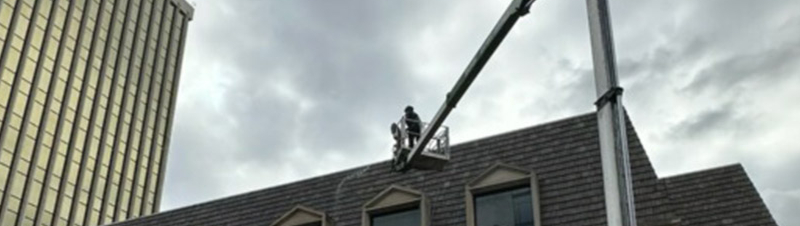
Commercial roof cleaning removes debris and surface buildup that disrupt drainage and increase wear on roofing materials. Because commercial roofs vary in materials, slope, and equipment layout, the cleaning method must match the surface being cleaned.
CleanPro inspects the roof condition, drainage points, and equipment locations before determining the safest and most effective cleaning method.
Soft Washing for Sensitive Roofing Materials
Many commercial roofing materials require low-pressure cleaning methods to avoid harming membranes or protective coatings. Soft washing provides a safe and controlled way to clean these surfaces while protecting the roofing system that keeps water out of the building.
Soft wash roof cleaning uses specialized cleaning solutions and carefully controlled water pressure to break down buildup without forcing water under seams or damaging roofing materials.
- Membrane seams and welded joints
- Roof coatings that shield the underlying material
- Adhesive bonds and connection points securing the membrane
- Roof warranties that require proper maintenance procedures
This method is commonly used on flat and low-slope roofing systems where protecting the membrane is essential.
Property owners frequently choose soft washing after seeing results from earlier commercial roof cleaning projects performed using this approach.
Some roof areas and surrounding structures can handle higher-pressure cleaning. Controlled pressure washing removes heavy debris, dirt buildup, and contaminants from durable rooftop surfaces.
- Concrete roof surfaces and service walkways
- Mechanical equipment platforms and pads
- Rooftop railings, ladders, and access points
- Nearby hardscape surfaces that collect roof runoff
When performed carefully, this method removes heavy buildup while protecting sensitive roofing materials and maintaining drainage across the roof system.
Commercial Properties That Benefit From Roof Cleaning
Many commercial buildings that need roof washing use flat or low-slope roofing systems where debris naturally collects over time. Regular roof cleaning helps maintain proper drainage and protect roofing materials across different types of properties.
This includes:
- Apartment complexes and multi-family properties
- Restaurants and food service locations
- Industrial and manufacturing facilities
- Retail centers and storefront locations
- Parking garages and structured parking facilities
- High-rise buildings and office parks
These properties typically rely on large flat roof systems where debris buildup can affect drainage and accelerate deterioration. Routine roof cleaning helps property managers maintain safe conditions and extend the life of the roofing system.
Types of St. Louis County, MO, Commercial Roofs We Clean
Commercial roofs are made from several types of materials, and each one comes with its own maintenance requirements. CleanPro matches cleaning methods to the roof system to protect the surface while removing debris and buildup that interfere with drainage.
Our roof cleaning services are structured to work safely across common commercial roofing systems, including:.
- TPO Roofing – single-ply membrane used on many modern flat roofs
- EPDM Roofing – durable EPDM rubber membrane systems
- PVC Roofing – chemical-resistant membrane often used on commercial buildings
- Modified Bitumen Roofs – layered asphalt roofing systems used on many commercial buildings
- Metal Roofing Systems – standing seam metal and coated panel systems
- Built-Up Roofing (BUR) – multi-layer BUR tar and gravel roof systems
Each type of roof requires a cleaning approach that protects membranes, seams, coatings, and drainage components while removing debris that interferes with proper drainage.
Frequently Asked Questions for St. Louis County, MO, Commercial Roof Cleaning
Quick responses to common questions about service scheduling, safety, drainage concerns, and what property managers can expect.
How often should roof cleaning be scheduled for commercial buildings?
Most commercial roofs benefit from a cleaning schedule of roughly every 6 to 12 months. Factors such as roof size, nearby trees, drainage layout, and seasonal debris buildup may require more frequent service.
Does roof cleaning harm commercial roofing membranes?
Yes. When the cleaning process is matched to the roof system, membrane roofing can be cleaned safely using soft washing or other controlled low-pressure methods.
Can roof cleaning help prevent drainage issues?
Yes. Roof cleaning removes debris and organic material that block drains and scuppers, helping water move across the roof properly.
Are all commercial roofing materials safe to clean?
Many commercial roofing materials can be cleaned safely, including flat roofs, membrane systems, and metal roofing. The cleaning approach must match the material being treated.
Can roof cleaning be performed while a building is occupied?
Generally, no. Cleaning services can often be scheduled around normal building operations and tenant activity.
Is commercial roof cleaning only about appearance in St. Louis County, MO?
No. The process supports roof maintenance by removing buildup that affects drainage and long-term roof performance.
What affects the cost of roof cleaning?
Pricing depends on roof size, debris buildup, roof access, roofing material, and whether drains or equipment areas also require cleaning. Quotes are typically based on the property and scope of work.
Can scheduled maintenance plans include roof cleaning?
Yes. Many property owners include this service in broader maintenance plans to address seasonal debris, drainage concerns, and rooftop buildup before they become larger problems.
Call CleanPro for St. Louis County, MO, Commercial Roof Cleaning
Commercial roof cleaning supports more than appearance. For property managers and building owners, it plays an important role in protecting roofing systems, maintaining drainage, and preventing avoidable maintenance issues.
- Routine roof cleaning helps keep drainage systems functioning properly by clearing debris that disrupts drains, scuppers, and water flow paths.
- Removing organic buildup helps reduce moisture exposure that can increase wear on roofing membranes and surface materials.
- Cleaning around rooftop equipment helps protect mechanical systems and service areas from debris, moisture buildup, and restricted airflow.
- Routine maintenance helps property managers identify developing roof issues earlier before minor debris or drainage problems become expensive repairs.
Our team works with commercial properties throughout the St. Louis County area using years of exterior cleaning experience and surface-appropriate methods designed to protect roofing systems while removing debris and buildup that interfere with drainage.
Our commercial exterior cleaning solutions include:
- Post-Construction Cleaning
- Hotel Exterior Cleaning
- Warehouse Cleaning
- Car Dealership Cleaning
- Poolside Cleaning
- Exterior Window Cleaning Services
- Residential House Washing
- Apartment Building Power Washing St. Louis
- House Power Washing
If you’re responsible for a commercial building in the St. Louis County area, CleanPro can help keep roof surfaces clear and drainage systems working properly. Call 636-686-7137 or request a free quote to learn more about commercial roof cleaning in St. Louis County, MO.