

Commercial roof cleaning helps prevent organic buildup and debris from creating serious problems for commercial buildings. Flat and low-slope roofs are especially vulnerable to drainage issues, trapped moisture, and costly maintenance problems when debris accumulates over time.
Facility managers, property owners, and building maintenance teams shouldn’t have to deal with roofing problems caused by predictable weather patterns and routine wear.
Read more about commercial roof cleaning below:
- Why Commercial Roof Cleaning Matters for Drainage
- How Commercial Roof Cleaning Works
- Commercial Properties That Benefit From Roof Cleaning
- Types of Commercial Roofs We Clean
- Frequently Asked Questions
CleanPro provides exterior cleaning services throughout the St. Louis area using surface-appropriate methods for different roof systems and conditions. Call 636-686-7137 or request a free quote to learn more about commercial roof cleaning.
Why Commercial Roof Cleaning Matters for Drainage
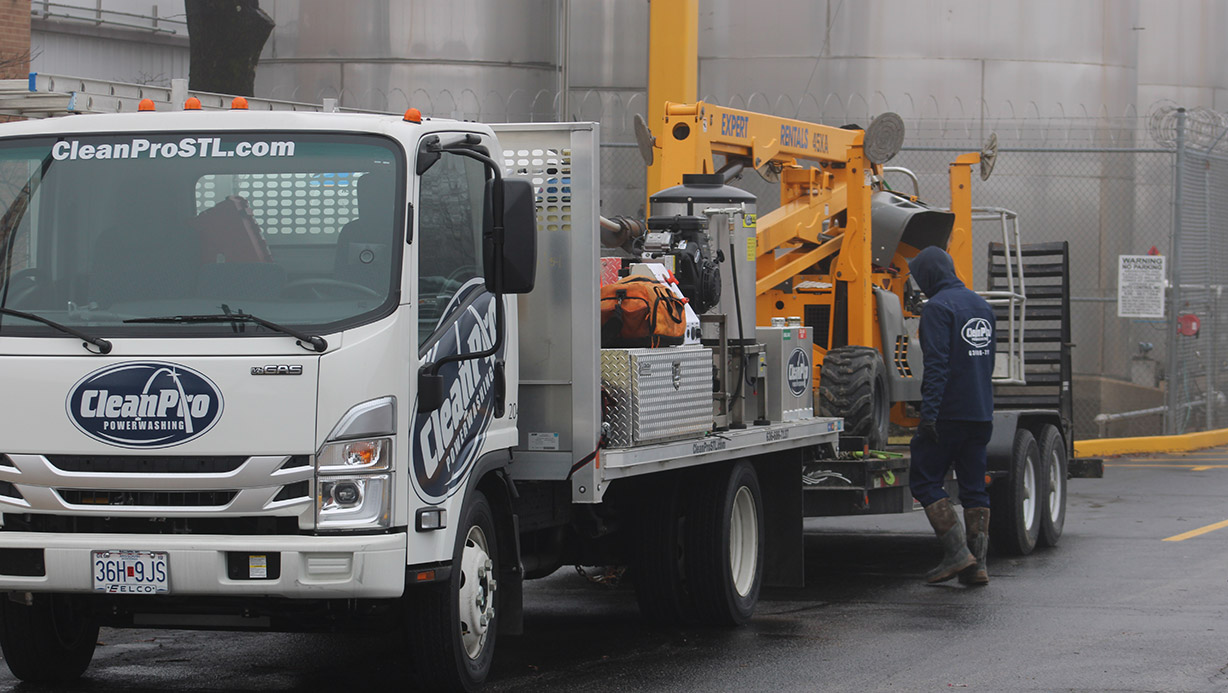
Commercial roofs rely on drainage systems to move water off the building and protect the structure below. When debris, organic growth, and rooftop buildup accumulate over time, those systems can stop working as intended.
Routine commercial roof cleaning helps keep roof surfaces clear so drains, scuppers, and other drainage components can function properly. The sections below highlight some of the most common ways debris and buildup interfere with commercial roof drainage.
Debris Blocking Roof Drains
Debris blocking occurs when leaves, branches, and other materials collect around rooftop drains or scuppers and prevent water from flowing off the roof. When these materials build up, they can restrict or completely block drainage points, allowing water to accumulate instead of draining away.
- Leaves and organic debris
- Trash carried by wind
- Roof gravel and sediment
- Material from nearby trees
Routine commercial roof cleaning removes this buildup before it has time to block drains and interfere with the building’s drainage system.
How Ponding Water Forms on Commercial Roofs
Ponding water occurs when water remains on a roof surface instead of draining away within a reasonable amount of time. On flat and low-slope commercial roofs, this usually happens when debris blocks drainage points or when buildup prevents water from reaching roof drains.
Even small drainage obstructions can allow water to collect in low areas of the roof. Over time, standing water increases stress on roofing membranes, seams, and flashing, and it can accelerate deterioration if the problem persists.
Commercial roof cleaning helps reduce the risk of ponding by removing debris and buildup that interfere with normal drainage paths.
Protecting Rooftop Mechanical Equipment
Commercial roofs often support critical building systems that help keep the facility operating day to day. These components sit directly on the roof surface and rely on proper drainage and airflow to function reliably.
- HVAC units and condensers
- Ventilation fans and duct systems
- Electrical conduit and service mounts
- Equipment platforms and support frames
Trapped moisture, restricted airflow, and debris can damage mounts, supports, and service areas. Proactive commercial roof cleaning and maintenance helps prevent expensive repair and replacement issues affecting critical rooftop equipment.
Organic Growth That Traps Moisture
Commercial roofs are constantly exposed to moisture and airborne spores. Over time, this environment can allow organics like algae and moss to grow on roof surfaces.
Some of the expensive (and preventable) risks of moisture and organic buildup include:
- Algae and dark roof staining
- Moss forming in low or shaded areas
- Lichen attaching to roofing materials
These growths hold moisture against the roof surface and can interfere with normal drainage patterns. Routine commercial roof cleaning removes organic buildup so roof surfaces dry properly and water can move toward drains without obstruction.
Seasonal Debris on Large Roof Surfaces
Commercial roofs often span large surface areas where debris can collect throughout the year. Wind, nearby trees, and changing weather patterns can deposit leaves, dirt, pollen, and other materials across wide sections of the roof where they can gradually interfere with normal drainage.
- Leaves and branches during fall
- Pollen and organic debris during spring
- Wind-blown dirt and dust during dry periods
- Storm debris after heavy weather
Because commercial roofs are rarely visible from ground level, debris can accumulate gradually without being noticed. Routine commercial roof cleaning helps remove seasonal buildup before it blocks drainage paths or contributes to standing water problems.
Drainage Problems That Shorten Roof Lifespans
Commercial roofing systems are designed to move water off the building efficiently. When debris, organic growth, or seasonal buildup interfere with drainage, water cannot move across the roof the way the system was designed.
Drainage problems can accelerate wear on roofing materials and lead to maintenance issues that are far more expensive to correct than routine upkeep.
Maintaining proper drainage is a key part of long-term commercial roof care. You can request a free quote to learn more about seasonal maintenance programs and CleanPro’s commercial roof cleaning services.
How Commercial Roof Cleaning Works
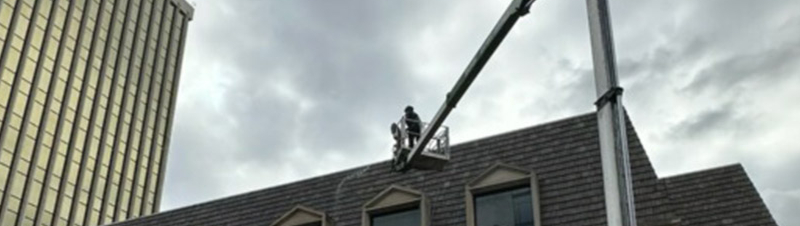
Commercial roof cleaning removes debris and surface buildup that interfere with drainage and accelerate wear on roofing materials. Because commercial roofs vary in material, slope, and equipment layout, the cleaning method must match the surface being treated.
CleanPro evaluates the roof condition, drainage areas, and equipment locations before selecting the safest and most effective cleaning approach.
Soft Washing for Sensitive Roofing Materials
Many commercial roofing systems require low-pressure cleaning methods to avoid damaging membranes or protective coatings. Soft washing provides a controlled way to clean these surfaces while protecting the roofing system that keeps water out of the building.
Soft wash roof cleaning uses specialized cleaning solutions with controlled water pressure to break down buildup without forcing water under seams or damaging roof materials.
- Membrane seams and welded joints
- Protective coatings that shield the roofing material
- Adhesives and attachment points that secure the membrane
- Manufacturer warranties that require proper maintenance methods
This method is commonly used on flat and low-slope roofing systems where protecting the membrane is critical.
Property owners often choose soft washing after seeing the results from previous commercial roof cleaning projects completed using this approach.
Controlled Pressure Washing for Durable Surfaces
Some roof areas and related structures can tolerate higher-pressure cleaning. Controlled pressure washing is used to remove heavy debris, dirt buildup, and contaminants from durable rooftop surfaces.
- Concrete roof sections and service walkways
- Mechanical platforms and equipment pads
- Metal railings, ladders, and rooftop access areas
- Adjacent hardscape surfaces that collect roof runoff
Used carefully, this method removes heavy buildup while avoiding sensitive roofing materials and maintaining proper drainage across the roof system.
Commercial Properties That Benefit From Roof Cleaning
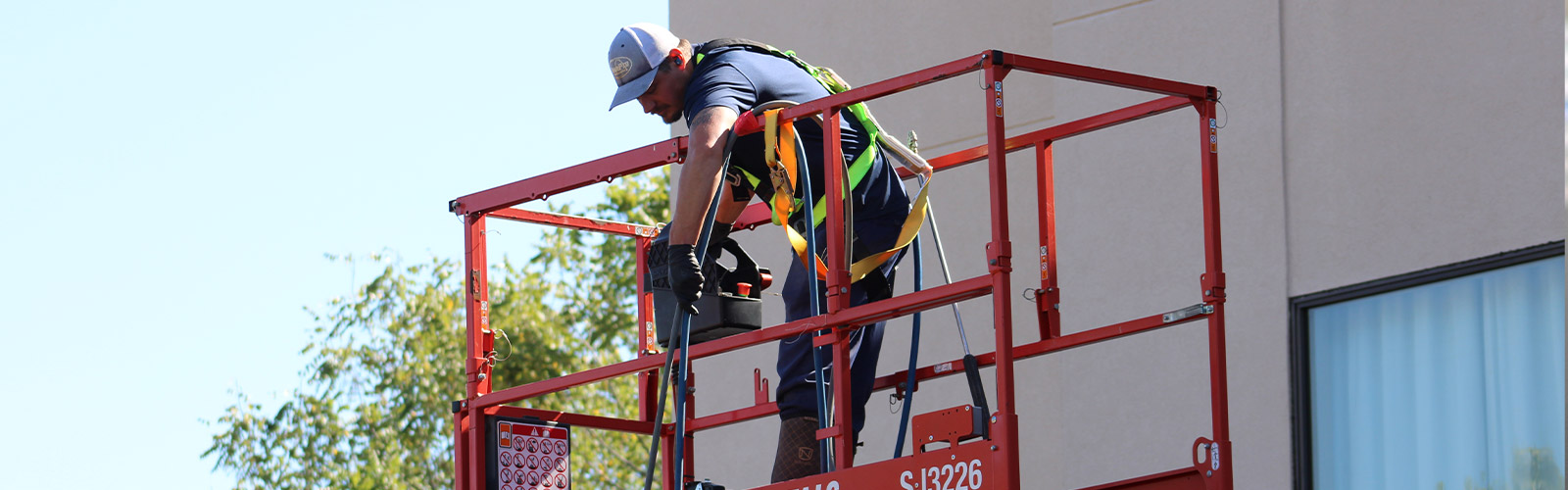
Many types of commercial buildings that need roof washing rely on flat or low-slope roofing systems that collect debris over time. Regular roof cleaning helps maintain drainage and protect roofing materials across a wide range of properties.
This includes:
- Apartment complexes and multi-family properties
- Restaurants and food service locations
- Industrial and manufacturing facilities
- Retail centers and storefront locations
- Parking garages and structured parking facilities
- High-rise buildings and office parks
These properties often depend on large flat roof systems where debris buildup can interfere with drainage and accelerate wear. Routine roof cleaning helps property managers maintain safe conditions and extend the life of the roofing system.
Types of Commercial Roofs We Clean
Commercial roofs are built using a variety of materials, each with different maintenance requirements. CleanPro selects cleaning methods based on the roof system to protect the surface while removing debris and buildup that interfere with drainage.
Our roof cleaning services are designed to work safely across common commercial roofing systems, including:.
- TPO Roofing – single-ply membrane used on many modern flat roofs
- EPDM Roofing – durable rubber membrane systems
- PVC Roofing – chemical-resistant membrane often used on commercial buildings
- Modified Bitumen Roofs – asphalt-based layered roofing systems
- Metal Roofing Systems – standing seam and coated metal panels
- Built-Up Roofing (BUR) – multi-layer tar and gravel roof systems
Each roof type requires the right cleaning approach to protect membranes, seams, coatings, and drainage components while removing debris that can interfere with proper water flow.
Frequently Asked Questions
Quick answers to common questions about scheduling, safety, drainage, and what property owners can expect from the process.
How often should a commercial roof be cleaned?
Most commercial roofs benefit from routine cleaning every 6 to 12 months, but the right schedule depends on the roof’s size, surrounding trees, drainage layout, and how quickly debris builds up. Properties with heavy leaf fall, frequent storms, or large flat roof areas may need more frequent service.
Is commercial roof cleaning safe for roofing membranes?
Yes, when the cleaning method matches the roof system. The approach should be based on the roofing material, slope, surface condition, and drainage layout. Sensitive membrane systems often require soft washing or other low-pressure methods rather than aggressive pressure washing.
Does commercial roof cleaning help prevent drainage problems?
Yes. One of the main reasons to clean a commercial roof is to remove debris, organic buildup, and seasonal material that can block drains, scuppers, and water flow paths. Keeping those areas clear helps reduce the risk of ponding water and unnecessary wear on the roof system.
What types of commercial roofs can be cleaned?
Many roof systems can be cleaned, including flat roofs, low-slope roofs, membrane systems, metal roofs, and other durable commercial roofing materials. The important factor is using the right method for the specific roof rather than treating every surface the same way.
Do businesses need to shut down during commercial roof cleaning?
In most cases, no. Service can often be scheduled around building operations, tenant needs, and facility access requirements. The exact plan depends on the property layout, roof access points, and the type of equipment or activity taking place below.
Is commercial roof cleaning only about appearance?
No. Appearance can improve after cleaning, but the bigger purpose is maintenance. Removing buildup helps keep drainage paths clear, reduces moisture exposure, protects rooftop equipment areas, and slows wear on roofing materials over time.
How much does commercial roof cleaning cost?
Pricing depends on the size of the roof, the amount of buildup present, roof access, the type of roofing material, and whether drains, equipment areas, or surrounding surfaces also need attention. A quote is usually based on the specific property and scope of work rather than a flat price.
Can commercial roof cleaning be part of a maintenance program?
Yes. Many property owners schedule this service as part of a broader maintenance plan to stay ahead of seasonal debris, drainage problems, and buildup around rooftop equipment. Regular service can make roof care more predictable and reduce the chance of larger maintenance issues developing over time.
Call CleanPro for Commercial Roof Cleaning in St. Louis
Commercial roof cleaning supports more than appearance. For property managers and building owners, it plays an important role in protecting roofing systems, maintaining drainage, and preventing avoidable maintenance issues.
- Routine roof cleaning helps keep drainage systems functioning properly by removing debris that blocks drains, scuppers, and water flow paths.
- Clearing organic buildup helps reduce moisture exposure that can accelerate wear on roofing membranes and surface materials.
- Cleaning around rooftop equipment helps protect mechanical systems and service areas from debris, trapped moisture, and restricted airflow.
- Regular maintenance helps property managers identify developing roof issues earlier before minor drainage or debris problems become costly repairs.
Our team brings years of exterior cleaning experience to commercial properties throughout the St. Louis area, using surface-appropriate methods designed to protect roofing systems while removing debris and buildup that interfere with drainage.
Our commercial exterior cleaning capabilities include:
If you’re responsible for maintaining a commercial property in the St. Louis area, CleanPro can help keep roof surfaces clear and drainage systems working properly. Call 636-686-7137 or request a free quote to learn more about commercial roof cleaning.